Introducing “Aseptic. Engineered. The SIG Expert Series” on safe, high-quality food packaging
Hanno Geissler is Head of Technology Services at SIG, bringing decades of experience in aseptic processing, food safety, and filling technology. Based at SIG’s R&D Center in Linnich, Germany, he supports the development, validation, and global deployment of innovative packaging and filling solutions. Passionate about combining technology, quality, and customer value, Hanno works closely with international teams and customers to advance safe, sustainable, and efficient food packaging systems.

The series combines expert video interviews and infographics to explain what aseptic processing and packaging means, how it works, and why it matters for consumers, manufacturers, and retailers. Each episode highlights the knowledge, engineering, and dedication behind SIG’s aseptic solutions.
Episode 1: What is aseptic processing and packaging?
In the first episode, Hanno Geissler, Head of Technology Services at SIG, explains the fundamentals of aseptic technology. A food chemist by education, Hanno began his career at the German Food Safety Authority before joining SIG to pursue the same mission from the industry side: helping ensure safe food until consumption.
What exactly is aseptic processing and packaging?
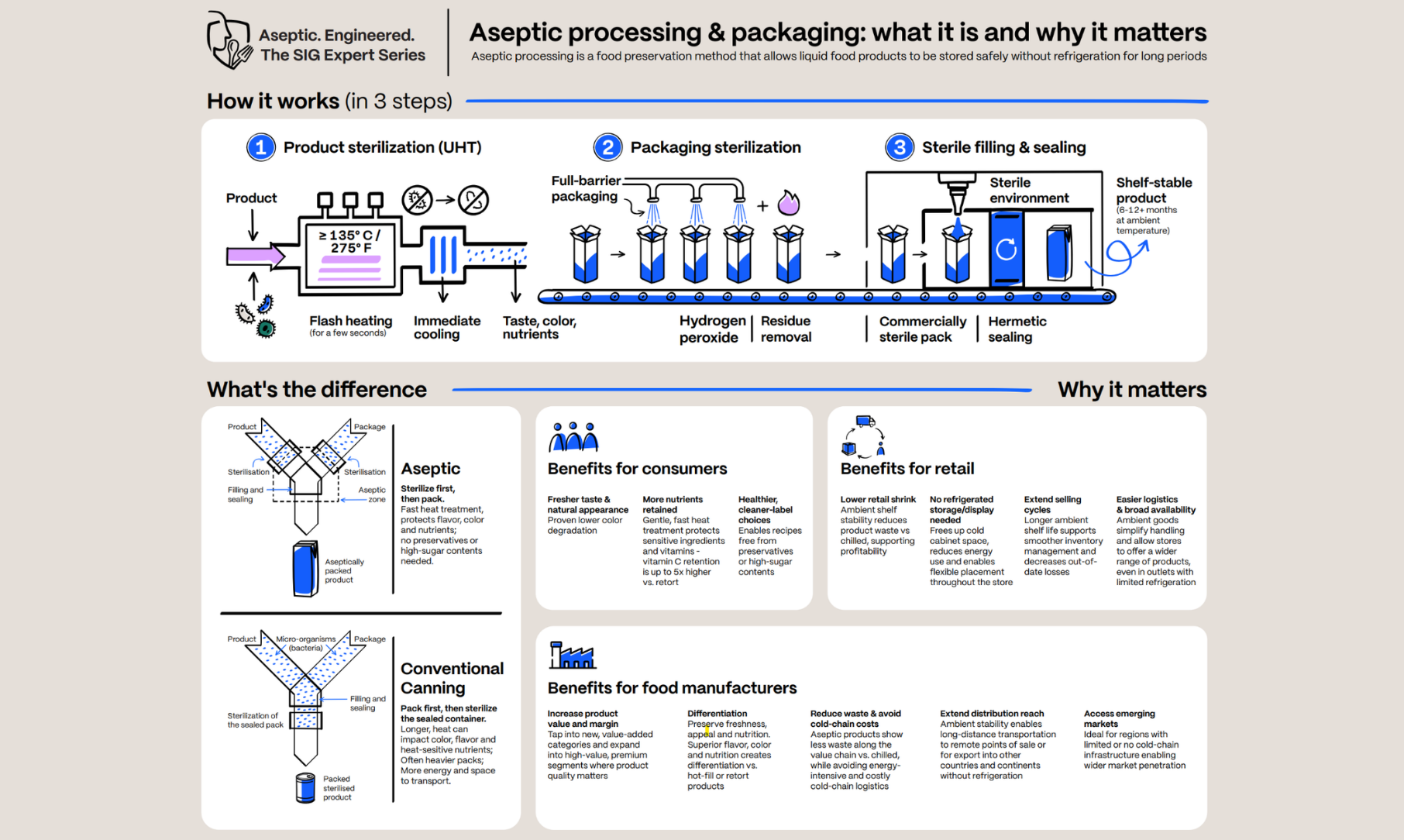
Aseptic processing is a food treatment and packaging method in which both the liquid food product and the packaging material are sterilized separately before being brought together in a sterile environment. This ensures that the final product is commercially sterile and safe to be stored at ambient temperatures for long periods without the need for preservatives.
As people sometimes confuse the two things, has aseptic processing anything to do with ultra-processed food?
No. not at all. While ultra‑processed food describes how foods are formulated which is strongly connected to their nutritional quality, aseptic processing describes a safe, efficient method to preserve food. These are independent concepts that can overlap, but neither implies the other. Take the most common aseptically processed and packaged food: plain white milk: This is done with minimum processing but keeping the high nutritional value and maximum protection till consumption.
How do aseptic processing and packaging work?
In simple terms, the product is quickly heated to ultra-high temperatures and then rapidly cooled to inactivate any microorganism, but preserve taste, color and nutrients. The packaging is sterilized – often using hydrogen peroxide – and any residues are removed. Under fully controlled sterile conditions, the sterile product is then filled into the sterile packages and hermetically sealed.
What makes this different from conventional canning?
Conventional canning sterilizes after the product is packed inside the container, usually requiring much longer exposure to sterilize every portion of the product inside the container. This affects flavor, color, and heat-sensitive nutrients. Aseptic processing uses much shorter heat treatment before filling, using direct heat transfer, which better protects product quality and avoids the need for preservatives. The difference in treatment time is huge – between seconds for aseptically treated products vs. heating time of minutes up to more than an hour for canned products.
With the basics covered, let’s look at what this means in practice – for consumers, manufacturers, and retailers. What benefits do consumers experience?
Consumers enjoy fresher taste, natural color, and better nutrient retention in aseptically packed products: A prominent example is vitamin C: levels are up to five times higher in UHT/pasteurized products compared to retort processing. Aseptic technology also supports clean label recipes with fewer additives and low sugar levels but also preserves the original taste of a pure product.
What’s the advantage for food and beverage manufacturers?
Aseptic enables entry into high-value categories, supports long distribution distances without refrigeration, hence opens opportunities in regions with limited cold-chain infrastructure. It also reduces food waste and losses as well as CO2 emission compared to chilled distribution as it eliminates energy intensive chilled logistics.
Why does aseptic matter for retailers?
Ambient shelf stability reduces losses, frees up valuable refrigerated space, but allows more flexible product placement.
Retailers can manage inventory more easily and therefor offer a wider assortment – even in outlets with limited or no refrigeration capacity.
Infographic: aseptic processing in a nutshell
- Bag-in-boxCartonSpouted pouch
- BeverageDairy & plant-basedFood
- October 29, 2026

Successful sustainable packaging connects environmental benefits with personal wellness

China’s fresh-made tea goes global: Key 2026 trends reshaping the international beverage market