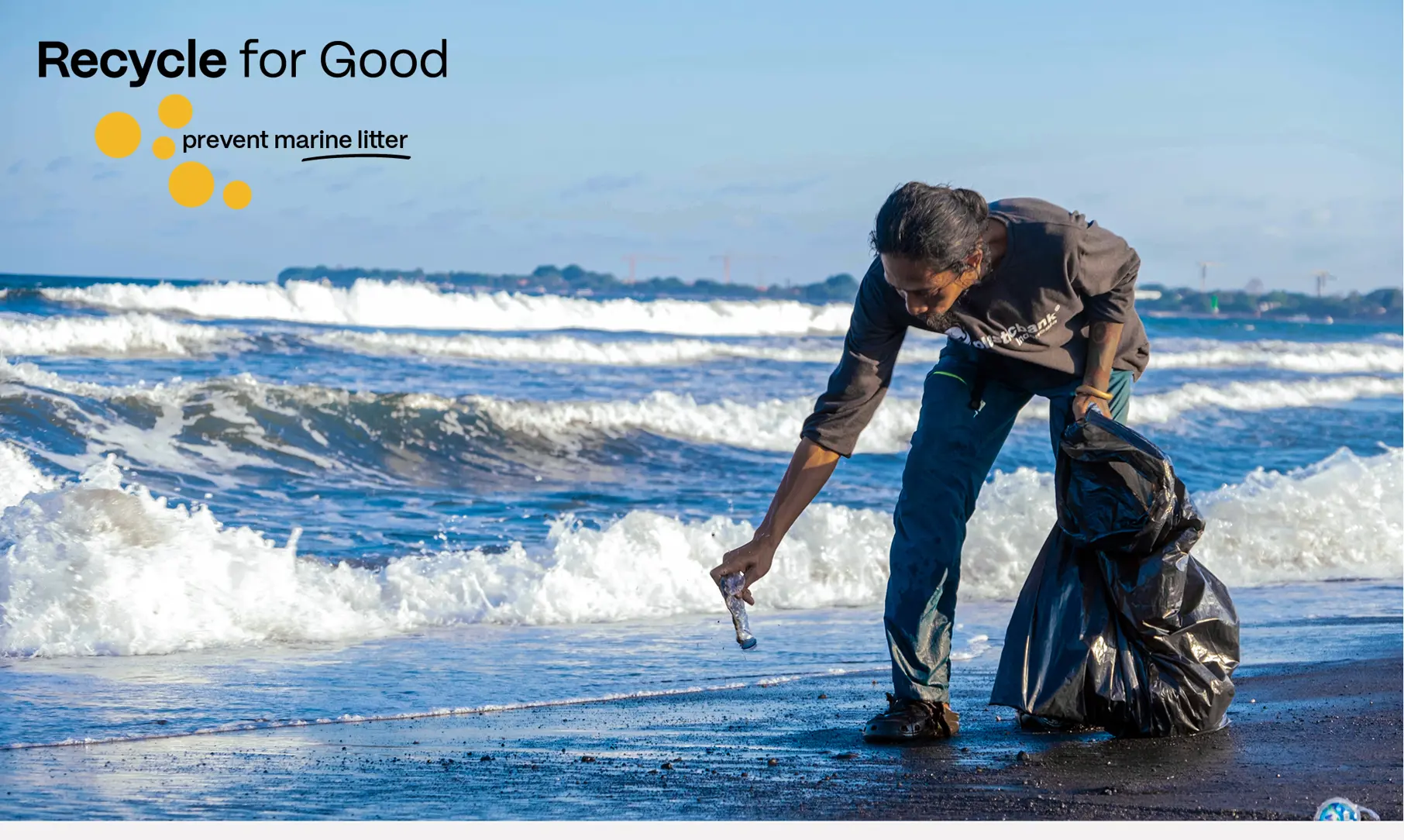
SIG and partners join forces to deliver systemic solutions to ocean-bound packaging waste
SIG and its project partners Plastic Bank, the Wuppertal Institute for Climate, Environment and Energy, and decision context have launched “Recycle for Good – Prevent Marine Litter”, an ambitious initiative to reduce packaging waste littering in Southeast Asia. The project targets to prevent at least 10,000 tons of waste from entering the ocean and is funded through ZUG (Zukunft – Umwelt – Gesellschaft), on behalf of the German Federal Ministry for the Environment, Climate Action, Nature Conservation and Nuclear Safety (BMUKN).
The 3-year project is designed to prevent ocean-bound plastic by strengthening collection and recycling systems for all types of packaging, including beverage cartons and plastics, in Thailand, Indonesia and the Philippines.
Implementation across Southeast Asia with clear targets
The project is running until November 2028. It aims to prevent at least 10,000 tons of packaging waste from entering the ocean while directly engaging around 100,000 people, including students, teachers, households, and informal waste collectors, in improved waste segregation and recycling practices. Implementation takes place in close cooperation with local recyclers, Producer Responsibility Organizations (PROs), schools, and public authorities.
Driving behavior change through education
A core pillar of Recycle for Good – Prevent Marine Litter is behavior change, with a strong focus on schools as catalysts for community action. By empowering pupils as change agents, the project promotes waste segregation at source and responsible disposal practices, extending beyond schools into households and local communities and helping to establish long-term recycling habits.
Digital tools to support long-term engagement
This behavioral approach is supported by Plastic Bank’s digital platform, which is being further developed and tailored specifically for use in schools. Through gamification features such as rewards, challenges, and collective goals, the platform incentivizes correct segregation and collection of packaging waste across all relevant material streams, including beverage cartons and flexible packaging. The solution is designed to support habit formation, collaboration, and sustained engagement rather than short-term behavioral change.
Scientific, analytical and strategic expertise
The Wuppertal Institute for Climate, Environment and Energy contributes scientific expertise through sustainability research and analysis, environmental impact evaluation, and the development of policy and system insights related to plastic waste management.
Decision context provides strategic analysis and data-driven decision support for behavior change initiatives and in modelling of their impact, helping to inform evidence-based decision-making and maximizing the project’s effectiveness.
The SIG Foundation contributes its social-impact expertise as a strategic, non-operational partner. It strengthens the project's social dimension, provides administrative support, and contributes to project-related communication.
Strengthening infrastructure and inclusive value chains
In parallel, the project invests in local recycling infrastructure, including the upgrading and establishment of facilities capable of processing used beverage cartons and flexible plastics. By strengthening recycling capacity and integrating informal waste collectors into formal value chains, Recycle for Good improves the economic viability of recycling and supports inclusive livelihoods within local waste management systems.
Advancing systemic solutions and policy frameworks
The initiative also contributes to the advancement of Extended Producer Responsibility (EPR) systems by demonstrating practical, scalable recycling models and sharing data and learnings with Producer Responsibility Organizations and policymakers in the focus countries. This helps create the conditions for long-term, system-level solutions that extend beyond the project’s duration.
Funding and joint commitment
“Recycle for Good – Prevent Marine Litter” is funded through the “Marine Debris Framework – Regional hubs around the globe” (Marine:DeFRAG) initiative, managed by ZUG (Zukunft – Umwelt – Gesellschaft), on behalf of the German Federal Ministry for the Environment, Climate Action, Nature Conservation and Nuclear Safety (BMUKN). The project is co-implemented by the partners and reflects a shared commitment to strengthening circular economy solutions, reducing marine litter, and building resilient recycling ecosystems in Southeast Asia.
About SIG
SIG is a leading solutions provider of packaging for better – better for our customers, for consumers, and for the world. With our unique portfolio of aseptic carton, bag-in-box, and spouted pouch, we work in partnership with our customers to bring food and beverage products to consumers around the world in a safe, sustainable, and affordable way. Our technology and outstanding innovation capabilities enable us to provide our customers with end-to-end solutions for differentiated products, smarter factories, and connected packs, all to address the ever-changing needs of consumers. Sustainability is integral to our business, and we strive to create a regenerative food packaging system.
Founded in 1853, SIG is headquartered in Neuhausen, Switzerland, and listed at the SIX Swiss Exchange. The skills and experience of our approximately 9,700 employees worldwide enable us to respond quickly and effectively to the needs of our customers in over 100 countries. In 2025, SIG produced around 54 billion packs and generated €3.2 billion in revenue. SIG has an AAA ESG rating by MSCI, a Platinum CSR rating by EcoVadis, and is included in the FTSE4Good Index. For more information, visit www.sig.biz
Your contact for media inquiries:
Heike Thevis
Press Officer at SIG
Tel: +49 (0)2462 79 2608
Email: heike.thevis@sig.biz
SIG and its project partners Plastic Bank, the Wuppertal Institute for Climate, Environment and Energy, and decision context have launched “Recycle for Good – Prevent Marine Litter”, an ambitious initiative to reduce packaging waste littering in Southeast Asia. The 3-year project is designed to prevent ocean-bound plastic by strengthening collection and recycling systems for all types of packaging, including beverage cartons and plastics, in Thailand, Indonesia and the Philippines.
Photo: Plastic Bank