

Explore new growth opportunities
Every business is looking for growth. The art is knowing where to look. Beyond existing food and beverage markets and product lines, some of the most promising opportunities lie in untapped consumer needs, unexplored occasions, adjacent categories, or new channels.
The question is: how do you identify them in a structured way?
The SIG Category Game Board™
The SIG Category Game Board™ is a practical workshop methodology that helps teams visualize their portfolio playing field, uncover hidden opportunities, and identify areas with the greatest growth potential.
By providing a collaborative framework, it enables food and beverage companies to assess where they are strongest today, explore emerging opportunities, and identify untapped “white spaces” for future development. More than a brainstorming exercise, the methodology transforms assumptions into structured discussions and discussions into prioritized growth opportunities.
Through a shared understanding of the market and business environment, teams can challenge existing thinking, identify gaps, and align on the most promising directions for innovation, growth, and strategic decision-making.
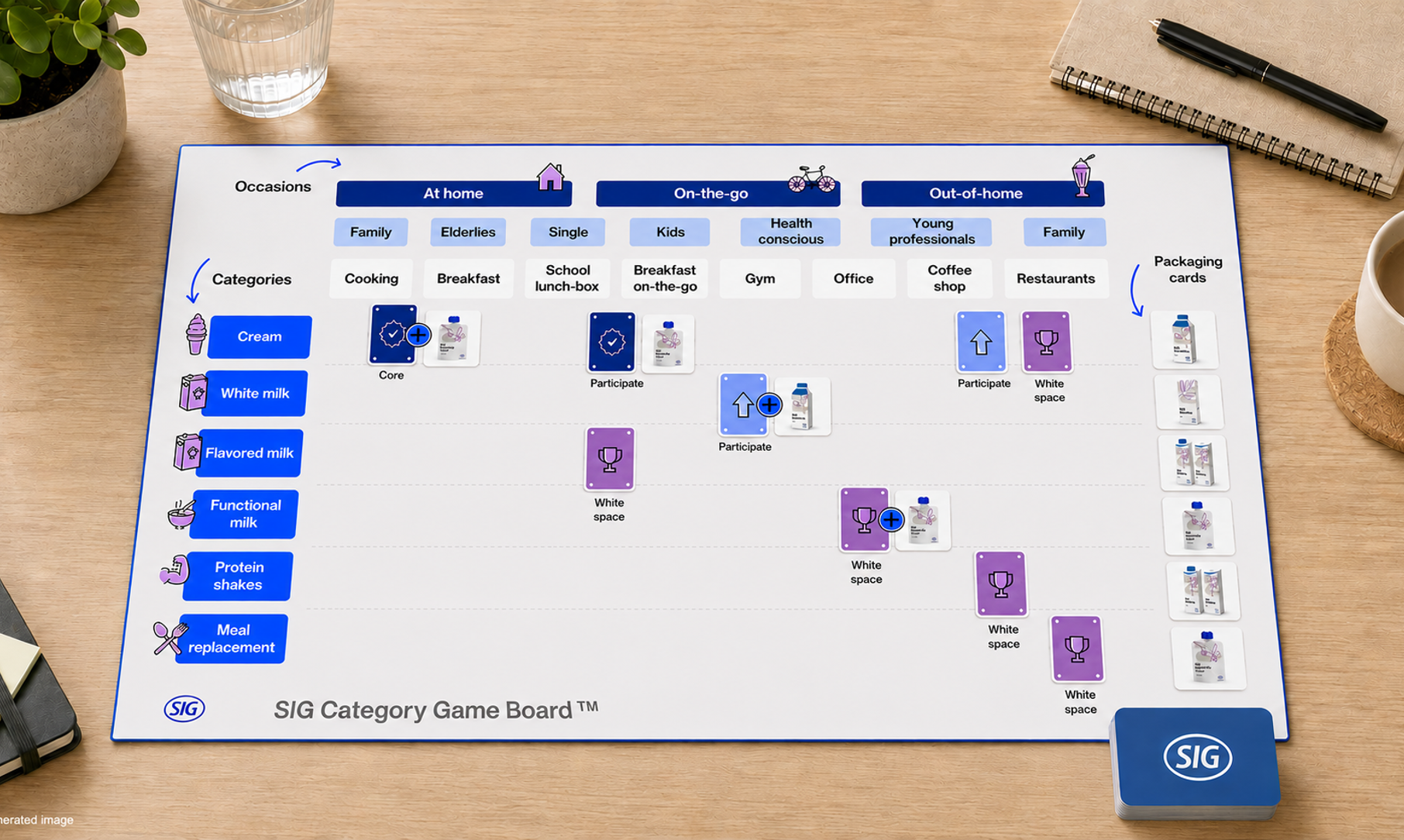
Key benefits of the SIG Category Game Board™
- Gain a shared view of your current business and an agreed set of white space opportunities
- Leave with a list of prioritized opportunities enabled by SIG packaging solutions
- Agree on a concrete plan of next steps
SIG Category Game Board™ whitepaper
Book a demo of the SIG Category Game Board™ in English
Identify your next move with us
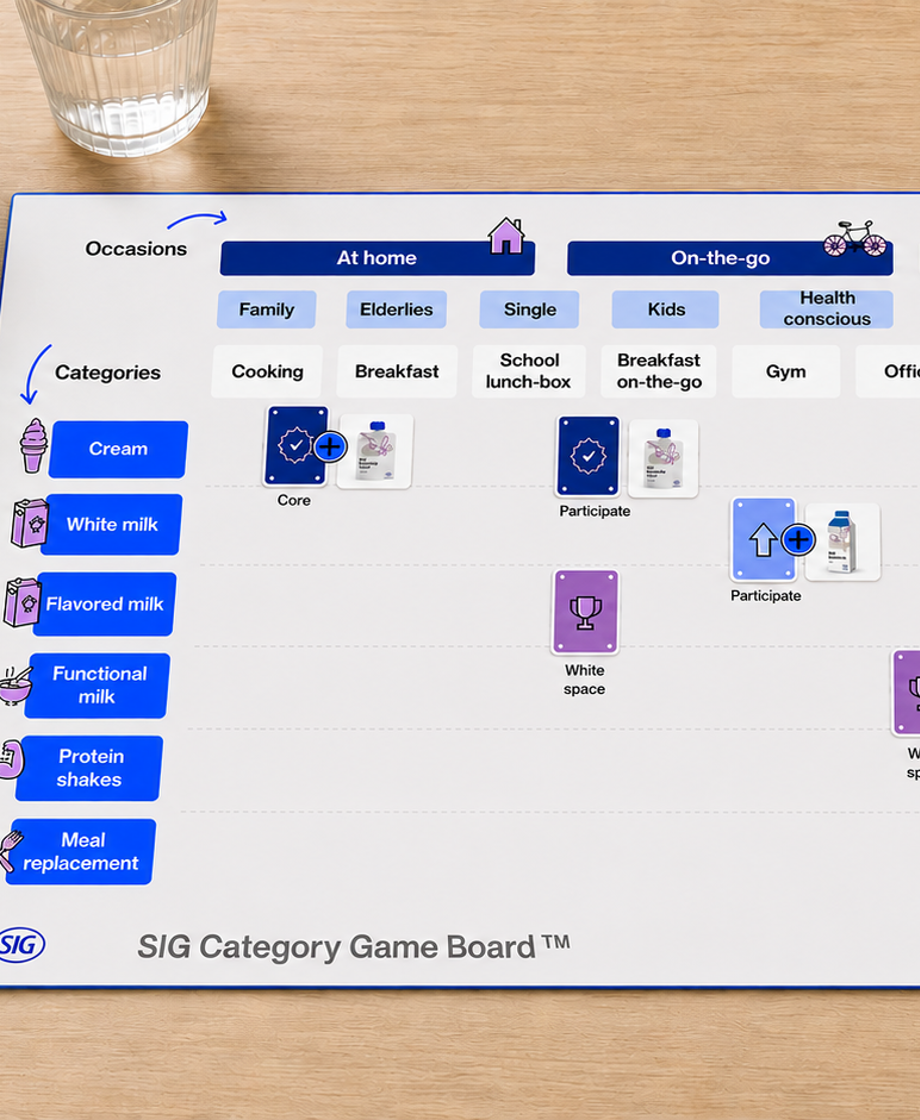
The SIG Category Game Board™ is an interactive session to jointly find the white spaces in your portfolio. Together we uncover where demand is shifting and define the moves worth testing.
Map your next opportunity with us
SIG has designed an opportunity mapping tool: the SIG Category Game Board™. In a facilitated session, your team and ours map your portfolio against categories, consumption occasions, target groups and channels and identify the white spaces worth pursuing.