
Minimal processing, maximum protection – what aseptic technology means for nutrition and clean label
Dr. Sonja Bischoff studied Nutrition Science before completing a PhD in Food Chemistry, researching the shelf life of aseptically packed fruit juices — the perfect starting point for a career at the intersection of food science and packaging. She joined SIG over 17 years ago in R&D, focusing on packaging-product interaction and shelf life, before spending more than a decade building expertise in sustainability and recyclability. As Senior Expert Sustainable Packaging, she now leads SIG's Food action area and developed the Food KPIs that underpin SIG's Annual Reporting — translating food science into sustainability strategy that is both credible and measurable.

In the latest episode of “Aseptic. Engineered.”, we look at a topic that is increasingly present in nutrition and consumer conversations: ultra-processed foods (UPFs). Together with Sonja Bischoff, Senior Expert Sustainable Packaging, Group Corporate Responsibility at SIG, we explore how aseptic technology can help keep food safe, nutritious, and tasty for longer – without refrigeration or preservatives, and often with simple recipes.
Episode 3: Ultra-processed foods and aseptic technology – why processing is not all the same
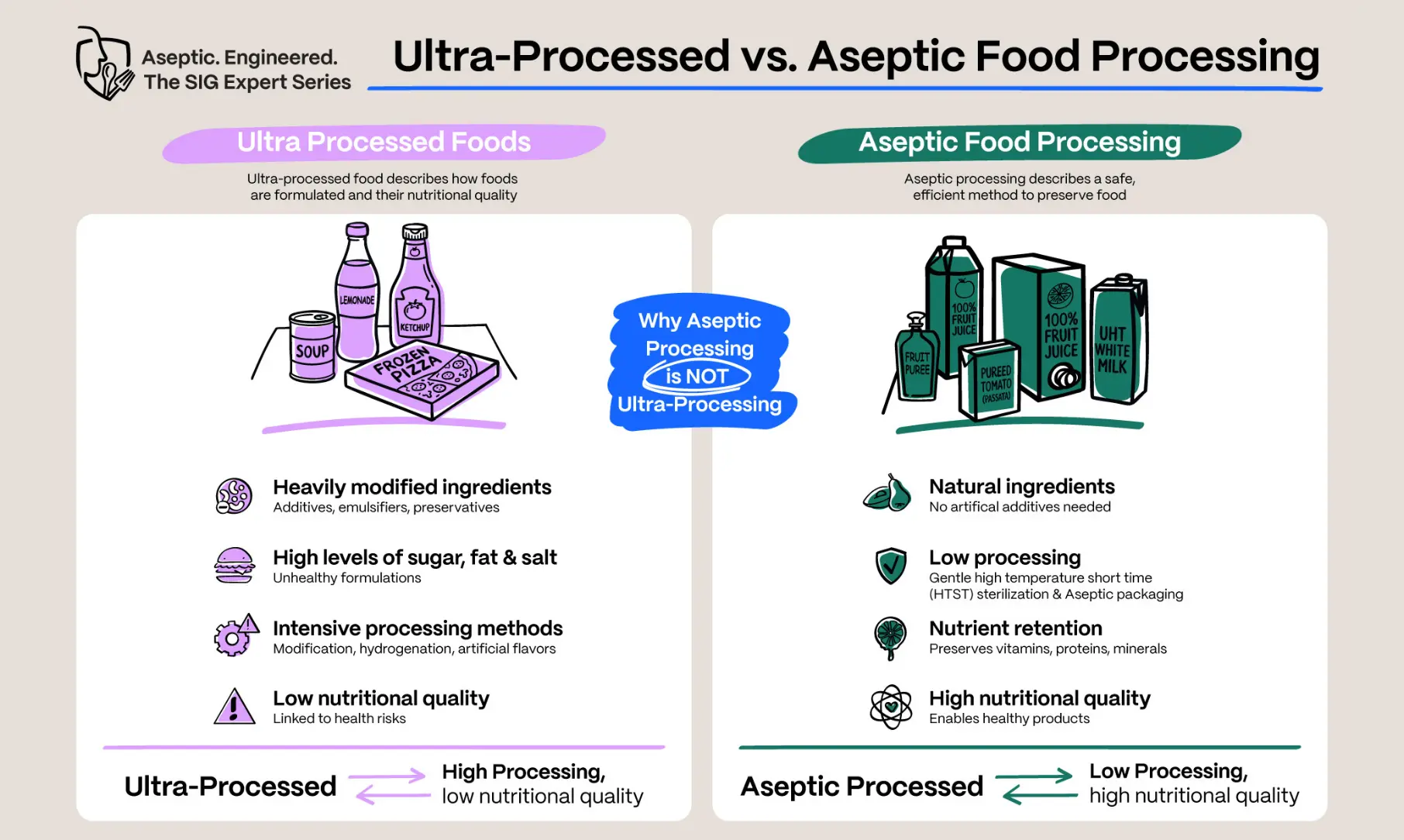
In this episode, Sonja Bischoff explains why “ultra-processed” and “aseptically processed” describe very different things. While UPF is mainly about product formulation and nutritional quality, aseptic processing is a preservation and packaging method designed to protect food safely and efficiently.
What exactly are ultra-processed foods?
Ultra-processed food is a nutrition classification term most commonly linked to the NOVA system, which groups foods based on the degree and purpose of processing. UPFs are typically formulated from industrial ingredients and go through multiple processing steps – often to optimize convenience, taste, and shelf life.
Importantly, “ultra-processed” is not a food safety label. These products are safe to eat, but the term helps describe how a product is made and what this can mean for nutritional quality. Rather than focusing on one “bad” ingredient, the discussion is about the overall balance of the product – for example, whether it contains higher levels of added sugar, salt or certain fats, and less fiber or naturally occurring micronutrients.
Sometimes people confuse “aseptic” with “ultra-processed.” What is the most important clarification?
Ultra-processed usually refers to highly formulated foods – and that often goes hand in hand with lower overall nutritional quality. Aseptically processed, on the other hand, describes how a product is made safe and shelf-stable through sterilization and sterile filling.
Many aseptically packed products can stay very close to the original food, with short, efficient heat treatment and simple recipes. In other words: aseptic is about maximum protection, not maximum formulation.
What does that mean for product recipes and clean label?
Because aseptic shelf life is achieved through the process, many products do not need the typical “shelf-stability helpers” often associated with highly formulated foods. That can mean no preservatives as a default approach, less reliance on added flavors or texture aids to compensate for harsh processing, and shorter, more understandable ingredient lists.
For consumers, this supports the idea of clean label: products that are protected for a long time, while the recipe itself can remain simple. For manufacturers, it opens opportunities to deliver safe, high-quality products with a balanced nutritional profile and fewer additives.
Where do most aseptically processed products sit in the NOVA scale?
It depends on the recipe, because NOVA classifies foods by formulation and processing intensity, not by packaging format alone. Many aseptically packaged products can be NOVA 1, meaning minimally processed – such as plain UHT milk, fruit juices, or tomato purée.
Others may fall into NOVA 3 when a minimally processed food is combined with culinary ingredients such as salt or oil – for example, certain tomato sauces. Aseptic packaging can also be used for products with more complex formulations. The key point is that aseptic technology itself does not make a food ultra-processed.
If you had to summarize the message in one sentence, what would it be?
Ultra-processed often means complex formulation and can come with lower overall nutritional quality, while aseptically processed can keep foods minimally processed and nutrient-rich – delivering maximum protection with simple ingredients.
Infographic
About “Aseptic. Engineered. The SIG Expert Series”
The series combines expert video interviews and infographics to explain what aseptic processing and packaging means, how it works, and why it matters for consumers, manufacturers, and retailers. Each episode highlights the knowledge, engineering, and dedication behind SIG’s aseptic solutions.

Food safety and preservation – why it matters and how food actually spoils

Introducing “Aseptic. Engineered. The SIG Expert Series” on safe, high-quality food packaging

Successful sustainable packaging connects environmental benefits with personal wellness
- noviembre 24, 2026