
The power of digitalisation
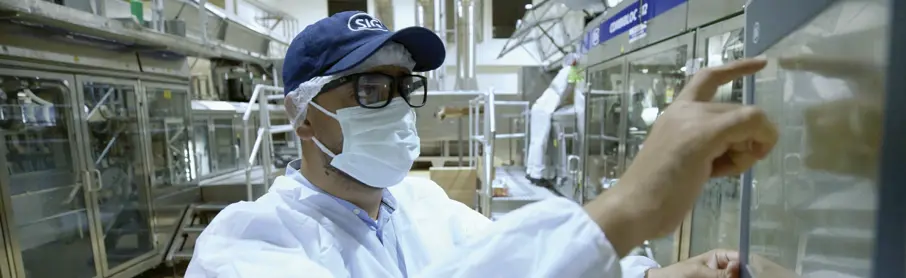
In part three of Ultimate Factories, we explore how data-based insights are transforming factories powered by digitalisation.
As we stand on the verge of Industry 5.0, digitalisation in manufacturing is more than a buzzword. It is the reality that is helping drive bottom lines. But what does smart manufacturing and digitalisation of production processes really mean in the food and beverage industry, and to what extent does a factory have to be digitalised to stand out?
Tech takes the lead
Smart manufacturing can be loosely defined as a technology-driven approach in which components in the manufacturing process share information digitally to improve performance. These components could be factory machines or stakeholder systems across the supply chain, and the data they share can be used to identify gaps and improve processes.
Among the most-adopted digital manufacturing initiatives are predictive maintenance, quality checks, predictive efficiency, energy efficiency, digital twin technology for fast prototyping, and real-time asset tracking.
Making data count
Data collection in manufacturing is nothing new. Historically, factories have recorded data relating to their operations, but this data was used to examine failures after they occurred, much like an airplane black box after a crash. But unlike the aviation industry, which has faced challenges around live black-box data, the food and beverage industry has made huge advances in using real-time data-based insights.
- Carton
- Beverage
- September 29, 2022