Global Foodservice 2026: Demand isn’t leaving town…it’s just changing addresses
A mid-2026 global snapshot of where demand is moving, why, and what it means for how the industry responds.
In 2026, it’s tempting to describe the global foodservice industry as pressured, uncertain, or even softening.
That’s not necessarily wrong … but it’s also not the full story.
Ryan Balock is Director of Global Marketing for Foodservice at SIG, where he leads a team focused on global growth strategy, customer engagement, and go-to-market initiatives for some of the world's leading QSRs. With nearly 30 years of experience in marketing, communications, and commercial strategy, Ryan specializes in helping foodservice organizations identify emerging market opportunities, accelerate innovation deployment, and build customer-centered growth programs across global markets.

What we’re actually seeing is something more fundamental:
Foodservice is not in decline – it’s being reallocated.
Consumers are still spending. Operators are still growing. Innovation is accelerating.
But the when, where, and why of demand has shifted – and it’s reshaping the industry unevenly across regions.
The result is a market that looks stable on the surface, but underneath is being re-wired in real time. The problem isn’t demand. It’s that much of the system is still set up to capture yesterday’s version of it.1, 2
This is what we’re seeing:
- smaller portion sizes – but higher expectations
- fewer visits – but greater scrutiny
- less spontaneity – but more planning
For operators, this is a fundamental change:
You’re no longer competing for share of stomach alone…you’re competing for share of justification.

Here’s how I see the evolution of foodservice:
|
Old Model |
New Model |
|
Volume-driven |
Value + occasion-driven |
|
Standardized menus |
Personalized + functional |
|
Stable dayparts |
Fluid consumption |
|
Mid-market dominance |
Polarized value vs premium |
“I see these trends in my own family dynamic. At home, we’ve shifted from takeaway as a way to feed everyone throughout a busy week to eating out as a rare treat or something to mark a celebration. Even then, budget is a concern.”
If you step back, the signals are clear. Costs are still elevated. In the United States, restaurant menu prices rose about 4.1% in 2025 versus 2.4% for grocery prices, and USDA forecasts suggest food-away-from-home inflation will stay higher than at-home inflation in 2026.1 Fuel has become part of the same story: Datassential found gas prices up more than 40% from February 2026 levels, with 69% of consumers saying they were likely to cook more at home and 61% saying they were likely to dine out less often because of higher gas prices.2
So yes…consumers are pulling back in some places. Datassential’s Table Stakes tracker found that 74% of meals were prepared at home and 37% of consumers expected to dine out less often in the coming month, while restaurant meals remained the top category consumers said they were cutting back.3 But that doesn’t mean people have disengaged from foodservice. It means they’ve become more deliberate about it. Nestlé Professional’s 2026 trends work framed the same tension well: consumers still want food and beverage experiences that feel worth leaving home for, even as they become more selective about when they spend.4
That distinction matters. For years, foodservice benefited from habit – commutes, routine dayparts, standard weekly occasions, and a fairly-reliable middle ground between value and premium. That pattern is breaking down. Today, foodservice is less of an automatic behavior and more of a conscious choice. Every occasion must earn its place.3, 4
We can think of it like this:
Foodservice is no longer something people do…it’s something they approve.
That’s a much higher bar.

The broad pressure on foodservice is global. The way it lands is highly regional.
Across most markets, the same macro dynamic is playing out:
Consumers feel under pressure – but they have not disengaged.
Inflation remains persistent, with menu prices continuing to outpace grocery. Gas shocks in 2026 have compounded that pressure, forcing consumers to rethink not just discretionary spend, but how they structure daily life.
The impact on foodservice is predictable – but still often misunderstood.
Consumers are:
- cooking more at home
- dining out less frequently
- trading down when they do
But here’s the nuance that matters:
They are not opting out – they are becoming more selective.

“In other words, foodservice hasn’t lost relevance. It has lost its status as a default mode. That’s a very different problem for the industry to solve.”
North America: Frequency is down, expectations are up
In North America, the shift shows up most clearly in frequency and scrutiny. Consumers are still using foodservice, but they are making harder judgments about value, convenience, and whether an occasion feels worth the spend. Operators can feel the push and pull at the same time: 75% of consumers say they are getting by financially, but 68% cite inflation and rising living costs as a major concern, and many are responding by ordering cheaper menu items, cutting beverages, or skipping add-ons when they do eat out.3 That is why value-led QSR formats and truly differentiated premium concepts are holding up better than undistinguished middle-market offers.3, 4
Shoutout to Taco Bell’s Luxe Value Meal program and its incredible gains in the last 12 months.
Europe: Polarization is accelerating fastest
Europe is a different version of the same story – less forgiving, and a bit further along. Coffee Ventures Europe and World Coffee Portal estimate that Europe’s branded coffee chain market reached 57,700 outlets by March 2026 and is on track toward roughly 69,200 by 2031, with 1,158 distinct chains now in play.5 But the most important number may be that only 30% of consumers agreed coffee shops offered good value.5 In other words, the market is still growing, but not in a way that rewards vague positioning. Operators are winning either by being clearly affordable or clearly worth paying more for. Everything else is fighting for relevance in the middle.5
Europe is also a useful indicator of where beverage-led innovation is heading. The same report points to non-coffee beverages as the number one growth opportunity for European coffee chains, while high-grade matcha sales rose 312% in 2025 and Caffè Nero sold 100,000 matcha units in its first week – against an initial forecast of 5,000.5 That matters because it shows how quickly consumer demand can move toward formats that feel fresher, more customizable, and more aligned with new daily rituals.5
By the way, matcha is everywhere. Prime example of an international ingredient exploding on menus around the world.
China: Scale + speed redefine the model
China continues to operate on a different curve entirely: bigger, faster, and more digital. USDA’s Beijing office estimated China’s coffee market at roughly $42 billion in 2024, with coffee consumption up by nearly 150% over the past decade and growth expected to remain around 15% annually.6 At the same time, Coffee Ventures Europe’s Gen Z data highlights how behavior is being rewired: 24% of China’s under-25 consumers visit coffee shops daily versus 11% of over-45s, and 77% of China’s Gen Z order via a coffee shop app.5 Euromonitor’s latest China foodservice summary adds the other half of the picture: the market remained positive in 2025, but consumers became more cautious on discretionary spend, intensifying competition and putting more pressure on operators to retain customers through sharper value and engagement tactics.7
I spent a few weeks in China this April and have seen the milk tea and coffee craze firsthand. Combine this incredible growth with digital-first ordering and 3rd-party delivery and operators must rely on technology in all aspects of their business to stay relevant in an incredibly competitive environment.
South Asia: The next demand engine – but not yet structured
South Asia is one of the clearest examples of where the demand is real, but the system is still catching up. In India, ICRA expects the organized QSR industry to deliver roughly 16%–19% revenue growth in FY2026 as lower price points, improving demand, and store expansion revive the category.8 Mordor’s India QSR summary similarly pegs the 2026 market at about $30.37 billion, with growth driven by delivery platforms, menu localization, and the continued rise of tier-2 and tier-3 cities.9 The point is not just that India is growing. It is that growth is being shaped by formats that can scale convenience, localization, and digital reach at the same time.8, 9
Growing stake in this region for major chains depends heavily on supply chain logistics. Getting products to market by planes, trains, ships, and automobiles is tough to begin with…doing it at low cost can be an impossible lift. This is why the permeation of mom-and-pop style restaurants and c-stores are so high. It will be interesting to see this region develop in the next five years. What chains – if any – will emerge as the dominant players?
South America: Price and cost pressure modernization and optimization
South America looks resilient in a different way. Euromonitor’s regional consumer foodservice snapshot for Latin America described 2023 as a surprisingly strong year given the inflationary and post-pandemic pressures the region had absorbed, and it pointed to delivery as an increasingly favored fulfillment format even as brands work to take cost out of third-party platforms.10 That pattern still matters in 2026. In practical terms, Latin America remains a region where consumers continue to spend, but operators are being pushed toward smarter channel management, sharper price architecture, and more disciplined ways of balancing convenience with profitability.10
This region is nearing a tipping point for chained foodservice operators. It’s clear the consumer is willing to spend in foodservice, but traditional means of running a foodservice business, from logistics, to in-store production, to delivery must evolve or risk holding back the industry from its true growth potential.
Middle East & Africa: Growth through premiumization and urbanization
The Middle East and Africa are moving on yet another rhythm – one shaped by urbanization, café culture, and the rise of premium everyday formats. Mordor estimates the Middle East and Africa coffee market at $17.14 billion in 2026, growing toward $24.89 billion by 2031, supported by urbanization, rising disposable incomes, and the growing social role of cafés; the same analysis points to localization, premium products, and ready-to-drink innovation as important growth levers.11 On the QSR side, Cognitive Market Research estimates the Middle East QSR market at $16.75 billion in 2025, growing to $25.33 billion by 2033, with demand supported by rapid urbanization and digital adoption.12 Put simply: in many Gulf and high-growth urban markets, premiumization and convenience are not opposing forces – they are increasingly the same proposition.11, 12
Australia & New Zealand: Mature markets redefining value
Australia and New Zealand show what a mature market looks like when expectations keep rising even if growth is steadier. Lightspeed’s 2026 State of Hospitality report found Australian customers now dine out and order takeaway equally, about three times per month on average, while operators said dine-in remained the largest revenue stream even as its share fell from 31% in 2024 to 20% in 2025 as takeaway, delivery, and alternative channels grew.13 In New Zealand, Nestlé Professional’s 2026 trends note that tighter household budgets and hybrid work are making ‘value-driven dining’ more occasion-specific rather than simply cheaper, while market summaries point to convenience, sustainability, and tourism recovery as key influences on the sector.14, 15 In ANZ, the question is less whether consumers still value foodservice and more whether operators can keep redefining what value means in highly mature, high-expectation markets.13, 14, 15
The ever-innovative Australian continent remains up to date with the latest beverage and food trends. With just enough locations for major chains to drive innovation adoption across the country, I see continued positives for the foodservice ecosystem if their products can align with consumer tastes.
Around-the-world wrap-up
Across all of these regions, the biggest shift is this: foodservice is no longer competing only for appetite. It’s competing for justification. Consumers still have appetite. They just don’t automatically allocate it to foodservice anymore.1, 2, 3, 4
That is why the old playbook – more outlets, more menu, more routine traffic – looks less reliable than it used to. Growth is increasingly coming from sharper occasions, more precise value propositions, and formats that can stay relevant in between full meal visits. It also explains why some of the most interesting energy in 2026 is coming from beverage categories rather than traditional meal categories.4, 5
Where growth is actually showing up: Refreshers and milk tea
If you want to see where foodservice is finding momentum right now, look at beverages. More specifically, look at the categories that let operators hold onto traffic without asking consumers to commit to a full meal. Two stand out: refreshers and milk tea.4, 5
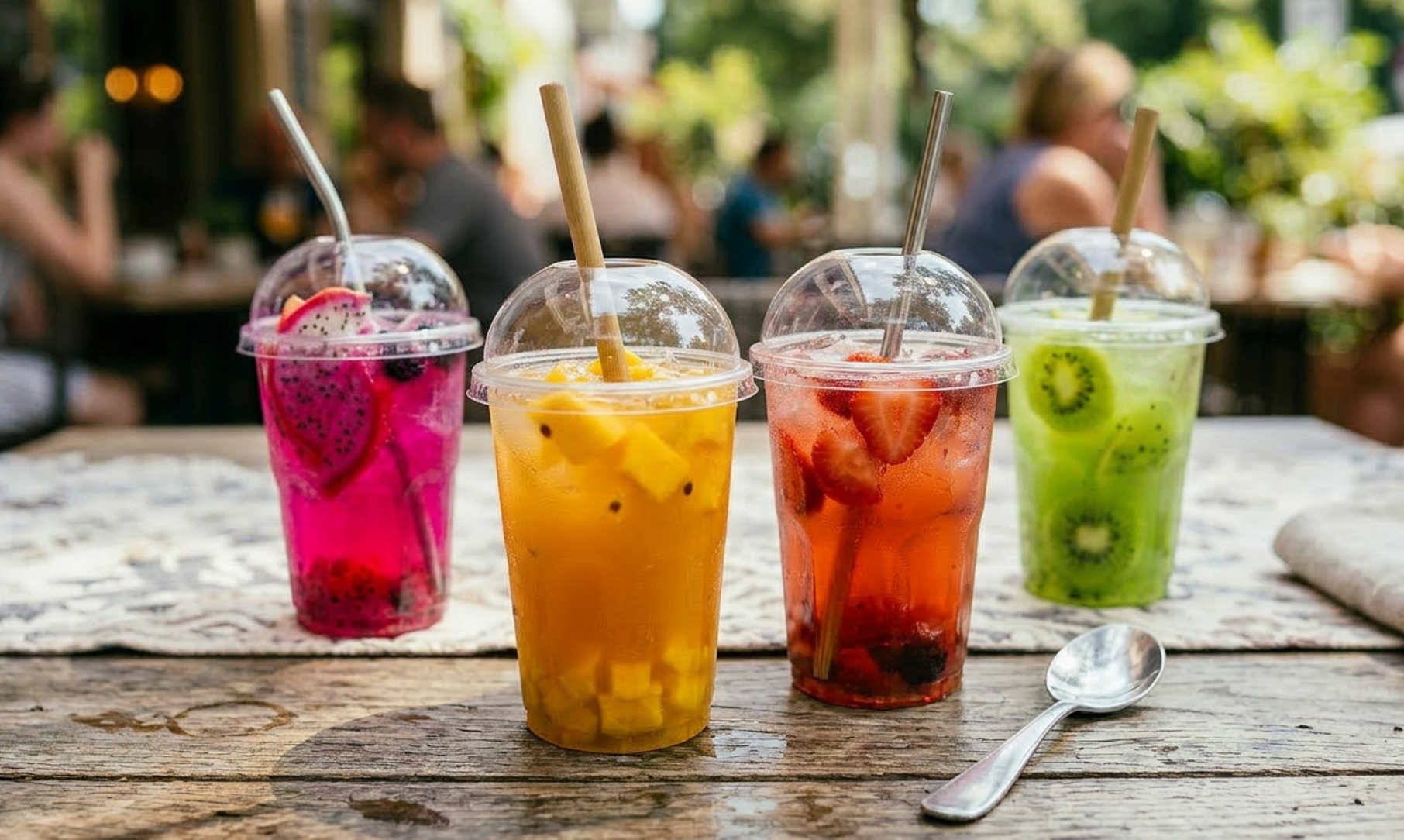
Refreshers: Small, frequent, easy-to-justify
Refreshers sit right at the sweet spot of several trends converging at once.
Consumers are:
- cutting back on full meals
- looking for smaller, more frequent “treat moments”
- increasingly interested in beverages that deliver function, flavor, and value at a lower price point
That’s exactly where refreshers win. What makes the format powerful isn’t just flavor – it’s fit:
- lower ticket than a full meal
- flexible across dayparts
- easy to customize
- perceived as both indulgent and “lighter”
In a year where consumers are thinking twice about every spend, refreshers give them an easy yes.
Refreshers work because they fit the 2026 mood almost perfectly. They sit at the intersection of flavor, refreshment, functionality, and relatively manageable spend. Nestlé Professional notes that more than three-quarters of consumers have tried refresher-style beverages and that beverages are increasingly being used as self-expression as much as refreshment.4 Starbucks is leaning into exactly that space: its official menu keeps multiple Refresher formats prominent, and in May 2026, Starbucks Canada introduced a more-customizable Refreshers platform that includes classic, energy-boosted, and caffeine-free options, with water, lemonade, or coconut beverage bases and new tropical flavor builds.16, 17 In a year when consumers are saying ‘no’ more often, refreshers give them a lower-friction ‘yes.’2, 3, 4, 16, 17
“I’m on the lookout for an increase of dairy as an add-in for refreshers. Right now it seems like a fad, but dangerously close to the all-valuable “trend” status.”
Milk tea: Customization at scale
Milk tea – and the broader bubble tea ecosystem - is solving a different part of the equation.
It thrives on three things that are increasingly non-negotiable:
- customization
- visual identity / shareability
- ongoing novelty without full reinvention
What’s important is not just that milk tea is growing…it’s how it’s growing.
The model is built for repeat engagement:
- endless combinations
- frequent limited-time flavors
- strong digital integration and app-based ordering

That aligns directly with the expectations now being set – especially by younger consumers – around personalization and control.
Milk tea simply does this more completely than most formats.
It turns a beverage into an experience without adding operational complexity at the same scale as full-menu innovation.
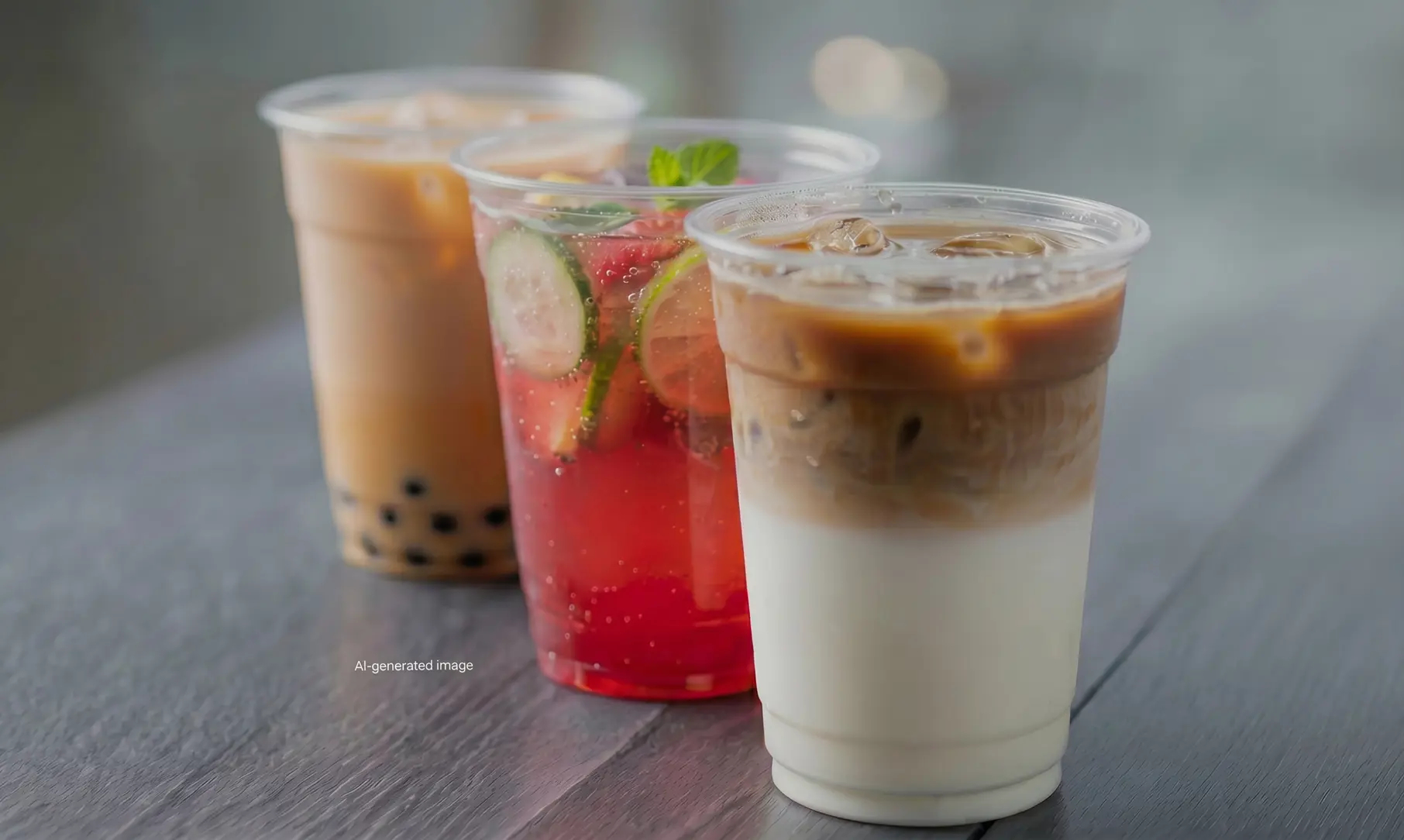
Milk tea is rising for a different but equally important reason: it turns customization into a repeatable business model. Gong Cha’s 2026 expansion and operations announcements are telling. The company says it operates nearly 2,200 locations across 33 international markets and more than 240 stores in the United States, and in March it moved to bring the rights to 170 U.S. locations in-house as part of a broader national expansion strategy.18, 19 Just as important, Gong Cha 2.0 is built around beverage automation, kiosks, data capture, and the ability to execute more than 200,000 drink combinations (you read that right) with faster prep times and greater consistency.18 That’s not just a tea story. It is a model for how a beverage category can deliver personalization, repetition, and operating discipline all at once.18, 19
Both categories matter because they help solve one of foodservice’s biggest problems in 2026: how to keep the consumer relationship active in a lower-frequency world. Refreshers and milk tea create reasons to visit without requiring a full meal commitment. They provide novelty without asking for a major spend. And they can travel across dayparts more easily than many traditional menu categories.3, 4, 5, 16, 18
That’s also why they matter from a systems point of view. Categories like these reward fast iteration, consistent execution, and packaging and dispensing choices that can support multiple channels – from foodservice to on-the-go retail to concentrate-led back-of-house models.5, 16, 18
That matters because the next phase of foodservice growth will favor categories and operators that can adapt quickly without rebuilding everything around them. This is no longer just a menu challenge. It is an execution challenge. And in a market that keeps moving, flexibility becomes a growth capability – not a nice-to-have.11, 18, 20
Innovation is no longer optional – it’s structural
This shift is also why innovation is accelerating – and why it looks different than it did even a few years ago.
The winners in 2026 are not just launching new products…they are adapting to new consumer frameworks:
- Functionality over indulgence
Protein, gut health, hydration, and energy are driving menu evolution - Flexibility over format
Dayparts are blurring, and offerings must adapt to fluid consumption - Experience over transaction
Dining out must offer something that cannot be replicated at home - Personalization over standardization
One-size-fits-all menus are quickly becoming a liability
Closing time: what does this all mean?
That, ultimately, is the 2026 picture. Foodservice demand didn’t disappear…it’s changing address. It moved across regions, channels, dayparts, and beverage formats. It shifted from habit to decision, from broad volume to more intentional occasions, and from default traffic to earned traffic.1, 3, 4, 5
For operators and manufacturers alike, the job now is not to manufacture demand from scratch. It is to catch up to where demand has already gone. The brands that win will not be the ones that simply protect the old model for a little longer. They will be the ones that can keep pace with how people actually want to eat and drink now – and build the systems to serve that reality quickly, consistently, and profitably.8, 18, 20, 21
“What makes this industry so fun for me is its continuous evolution. Nothing really surprises me these days but I’m starting to utter the words “black swan” when I think about how beverages are floating the foodservice industry right now. I’m not sure we’ll see this again for decades. It’s a wild ride…so hold on tight!”
Where does SIG fit into all of this?
All of these shifts – across regions, behaviors, and formats – point to the same thing:
The foodservice industry needs to be more flexible than it was designed to be.
Operators need to:
- launch faster
- adjust portioning and pricing more precisely
- respond to shifting demand without adding complexity
That’s not just a menu challenge. It’s an execution challenge. Store operations teams will be the difference-makers for winning chains in the next decade.
And that’s exactly where SIG fits.
Whether it’s:
- connecting product suppliers and foodservice operators with multi-ingredient drink recipes that consumers crave
- simplifying the entire system with more adaptable bag-in-box packaging and operations-friendly dispensing systems
- helping brands grow scale with product concepts across markets with velocity on their side
SIG bag-in-box helps make the foodservice system better and more responsive.
Because in a market that keeps moving, the edge doesn’t go to the biggest players. It goes to the ones that can adjust the fastest.
Reach out if you want to talk about how SIG’s foodservice team can help your program move to the next level.
Endnotes
1 Datassential, Inflation: Perceptions vs. Reality, March 2026, pp. 4–5 and 9. Key figures used include 2025 menu-price inflation of 4.1% vs. grocery inflation of 2.4%, and USDA’s 2026 outlook for food-away-from-home vs. food-at-home inflation.
2 Datassential, Impact of 2026 Gas Prices, May 2026, pp. 2–3 and 21–23. Key figures used include gas prices up more than 40% since February 2026, 69% likely to cook more at home, and 61% likely to dine out less often.
3 Datassential, Table Stakes Tracker, May 2026, pp. 18–26. Data used include home-vs.-away-from-home meal share, expectations to dine out less often, top expenditure cuts, price perceptions, and consumer savings behavior while eating out.
4 Nestlé Professional Solutions, 2026 Top Food & Beverage Industry Trends, published May 2026, especially pp. 3–8, 11–18, 22–28. Used for experience-led dining, personalization, beverage self-expression, and refresher adoption signals.
5 Coffee Ventures Europe / Allegra Group, 10 Procurement Trends Reshaping European Branded Coffee Chain Market, June 2026, pp. 2–15. Used for European outlet counts and forecasts, consumer value perceptions, matcha growth, Gen Z digital behavior, and non-coffee beverage momentum.
6 USDA Foreign Agricultural Service, Beijing ATO, Brewing Momentum: China’s Coffee Market and Emerging Opportunities for U.S. Exporters, January 15, 2026 (Report CH2026-0003). Used for China coffee market size and growth trajectory.
7 Euromonitor International, Consumer Foodservice in China, April 2026 product summary / overview snippet accessed via web search on June 9, 2026. Used for characterization of the Chinese market as resilient but slower-growing and more competitive amid cautious discretionary spending.
8 ICRA, Indian Quick-Service Restaurant Industry, April 2025. Used for FY2026 revenue growth expectations, store expansion, and value-led recovery in organized Indian QSR.
9 Mordor Intelligence / GII summary, India Quick Service Restaurant – Market Share Analysis, Industry Trends & Statistics, Growth Forecasts (2026–2031), January 2026 web summary accessed June 9, 2026. Used for 2026 Indian QSR market sizing, delivery-platform growth, and tier-2/tier-3 expansion themes.
10 Euromonitor International, Consumer Foodservice in Latin America, May 2024 report summary / product page snippets accessed via web search on June 9, 2026. Used for evidence of resilience, continued growth, and the increasing importance of delivery in Latin American consumer foodservice.
11 Mordor Intelligence / GII summary, Middle East & Africa Coffee – Market Share Analysis, Industry Trends & Statistics, Growth Forecasts (2026–2031), January 12, 2026 web summary accessed June 9, 2026. Used for MEA coffee market sizing, urbanization, café culture, localization, and RTD trends.
12 Cognitive Market Research, Middle East Quick Service Restaurant – QSR Industry Report 2026 web summary accessed June 9, 2026. Used for market sizing and medium-term growth context for the Middle East QSR channel.
13 Lightspeed Commerce, 2026 State of Hospitality Report (Australia), web summary accessed June 9, 2026. Used for Australia dine-in vs. takeaway frequency, channel-shift observations, and operator technology adoption.
14 Nestlé Professional New Zealand, 10 New Zealand Foodservice Trends to Watch in 2026, March 26, 2026. Used for occasion-based value framing, tighter household budgets, and changing guest expectations in New Zealand foodservice.
15 Mordor Intelligence / Research and Markets summary, New Zealand Foodservice – Market Share Analysis, Industry Trends & Statistics, Growth Forecasts (2026–2031), January 2026 web summary accessed June 9, 2026. Used for market-growth context, convenience, sustainability, and tourism-recovery themes in New Zealand.
16 Starbucks Coffee Company, official Refreshers menu page, accessed June 9, 2026. Used for evidence of the breadth and prominence of Refresher formats on the Starbucks menu.
17 Starbucks Canada, ‘Starbucks summer menu introduces new customizable Starbucks Refreshers beverages and mango flavoured beverages nationwide on May 12,’ published May 11, 2026. Used for customizable Refresher platform, energy-boosted and caffeine-free options, and new tropical launches.
18 Gong cha, ‘Announcing Gong cha 2.0: A New Era of Innovation, Efficiency and Growth,’ PR Newswire, January 29, 2026. Used for global scale, U.S. footprint, automation, kiosk adoption, productivity gains, and customization scale.
19 Gong cha, official global / USA site and March 9, 2026 PR summary on acquisition of rights to 170 U.S. locations. Used for menu-positioning, customization, and U.S. expansion strategy.
20 SIG, Beverage Packaging: Protecting Taste and Quality in Every Drink, official site accessed June 9, 2026. Used for SIG’s beverage-category coverage, aseptic carton / bag-in-box / spouted pouch solutions, shelf-stable capabilities, and flexible filling systems.
21 SIG, corporate homepage and solutions overview, official site accessed June 9, 2026. Used for broader portfolio framing and ‘packaging systems and solutions’ positioning across beverage applications.
- Bag-in-boxCartonSpouted pouch
- BeverageDairy & plant-basedFood
- August 06, 2026
Aseptic packaging powering the rise of regional beverages

Beyond the forest